Zoe's Botanical Kitchen
Award-winning distiller, marmalade maker, botanical cook
and recipe developer.
Sharing delicious gluten-free recipes, & botanical baking inspiration
you'll love, whether you're gluten-free or not.
Bringing people together through a passion for seasonal food,
botanical flavours, and great drinks to enjoy and share.
Search:
Latest Recipes from ZBK

Hi, I'm Zoe
Former decorative paint finisher. Lived in Japan and South Korea for seven years. Co-founder of Shed One Distillery. Forager and botanical enthusiast. Award-winning marmalade maker. Collector of cookbooks and culinary inspiration. Believer that good food brings people together.

- Afternoon Tea customer
Inspiration of the month:
Fan Favourite:
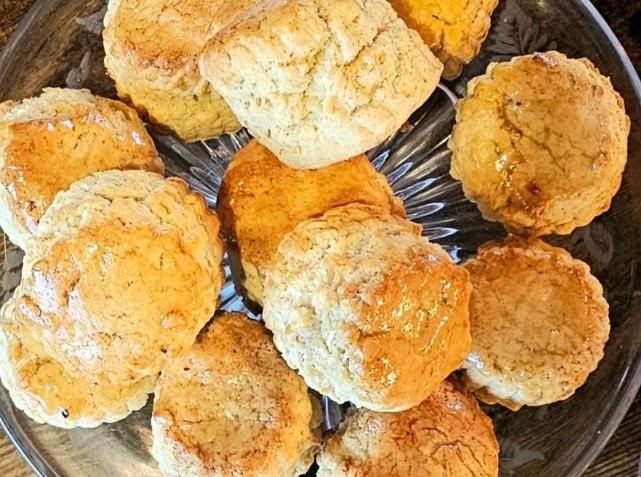
"Best scones ever! I couldn't believe they were gluten free!"
Well, that's according to a few of our guests for Afternoon G&Tea at the Shed. If you'd like to try what they're all raving about, and you can't get to the Shed, here's the recipe.
The basic recipe is one I found from both Mary Berry and Marguerite Patten. As far as I'm concerned if it's good enough for them, I'm not arguing! However, I tweaked to work as a gluten-free recipe.
As for the milk and butter, go ahead and use what you prefer. I like to bake with vegetable fat and gluten-free oat milk. That means my scones are gluten and dairy free. You can also follow the option to make it egg-free, too.
The video shows a different flour mix. The one above is my most basic, and the ingredients are the easiest to get hold of.
In the video I've used 320g Self Raising, 100g Sorghum Flour and 30g Cornflour.
Sorghum is a lovely flour for scones and cakes. You will notice the colour is darker than your standard SR and Plain flours. Use the search bar to find more alternative scone mixes.
Calories: ~185–190 kcal
Carbohydrates: ~25 g
Protein: ~3–3.5 g
Fat: ~8 g
Sugar: ~6–7 g
Enjoying this recipe? Members get:
Recipe Videos
- Afternoon Tea customer
Featured Recipes
You need to be logged in to view this content. Please Log In. Not a Member? Join Us
Tips From Zoe's Botanical Kitchen
There are various types of gluten-free flour, not just plain (all purpose) and self raising. However, these two standards can be used very effectively for many sweet and savoury bakes. Readily available in most supermarkets and health food stores, I use Dove Freee.
As they are both made with a mix of flours, you will need to be careful regarding any allergies. I remember serving some of my sweet Scones for Afternoon G&Tea at Shed One and one of the guests told me she had a potato allergy. Thankfully, I’d made another batch using rice flour so all worked out well.
Both the Dove self raising and plain flours contain the following: rice, potato, tapioca, maize and buckwheat.
You can create your own mix of flours depending on what results you are looking for.
Those scones, for example, could be made with your own combination of buckwheat, teff, oat and rice flours. Perfect for a savoury, more nutty scone served with cheese and chutney. Type in Scones in the search bar and you'll find a few ideas to try.

Unless otherwise stated, store your flours in airtight containers in the cool, dry and dark for about 3 months, or in the fridge/freezer for up to a year. Check the packets for details.
Almond Flour
With its low glycaemic index (GI) almond flour converts to glucose slower than wheat flours, meaning its good for balancing blood sugar. However, avoid if you're baking for someone with a nut allergy. I love the nuttiness and depth it brings to cakes.
Sorghum
High in antioxidants, fibre, protein, unsaturated fat and minerals: phosphorous, calcium, potassium and iron. All that in an earthy flour with mild, sweet nuttiness. Mix it with other flours with sorghum being no more than 50% of the mix.
Tapioca
I was never a fan of tapioca pudding, in fact I dreaded those particular school dinner days! However, that was then and this is now. Tapioca flour is made from the root of the cassava plant. It binds and thickens. Also known as Tapioca Starch, it can be used in the same way as corn flour, which is a softer version.
Chickpea Flour
Chickpea flour is the flour of choice for onion bhajis and is popular across a wide range of Indian cookery. Great for coating vegetables to be fried, and for making flatbreads. Reach for the chickpea, aka gram flour, when your cooking savoury dishes. Earthy in flavour.
Polenta (Cornmeal)
Cornmeal, not to be confused with cornflour, polenta is made from dried, ground maize (corn). It comes in coarse and fine varieties and is recognisable by its bright yellow colour. I recently made Cornbread for the first time-not sure why it took me so long to get round to it! It's easy and quick so great for last minute "bread" choices.
Buckwheat
Despite the name, buckwheat is naturally gluten free. Buckwheat is related to rhubarb and is actually a seed. It’s nuttier and has a deeper flavour. However, if you have a gluten intolerance, do read the small print on pre-made buckwheat products and ask when eating out. For example, soba noodles can be made with a mix of buckwheat and traditional wheat flours. Gluten binds, so flours containing gluten keep the noodles from crumbling. However, you can buy Soba Noodles, or even try your hand at making your own.

Enjoying this article? Members get:
Teff (Eragrostis teff)
Here, I have to admit I have a soft spot for Teff Flour. It's an ancient grain, over 3,000 years old, the smallest in the world, and is a staple in Ethiopia. Naturally gluten-free and full of protein, amino acids, prebiotic fibre, minerals and iron. It's also time consuming and costly to grow and harvest which means costs more to buy. However, it has a lovely depth and nuttiness which adds so much to savoury pastry and more. Always mix it with other grains, rather than use alone. Once you have opened a pack, seal up what you don't use and store it in the fridge or freezer.
Did you know that "Teff" means "Lost" in Amharic? Perfectly describes what can happen to these tiny grains if dropped!
Oat (Gluten Free)
I buy gluten free oats for Flapjacks and Crumbles so if I want some oat flour, I simply whizz some oats up in a food processor. It gives a moist crumb in baking. Oat flour, just like oats, is high in soluble fibre (which is good for heart health. Plus, it's a great source of protein, iron, magnesium and B vitamins.

White Rice
Rice Flour tends to be widely available and works well for sweet and savoury bakes. Although brown rice has far more nutrients, white rice is better for lighter textures. It’s also my go to for Shortbread. Sometimes I use only rice flour (white and/or brown), or I do a half and half with the gluten-free plain flour.
Brown Rice
Mild, slightly nutty, and a bit earthy compared to white rice flour. It gives baked goods a denser, more wholesome feel. Using the whole grain means it retains its nutrients including B vitamins and magnesium.
Did you know that you can make flatbreads using just brown rice flour with some water and salt? You can also combine brown rice flour with white rice flour to make a nuttier Shortbread.
I will be adding more flours and their many uses in the coming weeks.
Check back to read more.
| Flour | Flavour | Best For |
| Rice | Neutral | Cakes, biscuits |
| Sorghum | Mild | Cakes, muffins |
| Buckwheat | Nutty | Pancakes, bread, pastry |
| Gram | Earthy | Savoury baking |
| Ground Almonds | Rich | Moist cakes |
Enjoying this article? Members get:
- Afternoon Tea customer
Search by Tag
Become a member and unlock the full world of gluten-free cooking. As a member, you’ll get exclusive access to recipes, workshops, and tips that make cooking delicious, creative, and fully gluten-free.
Yearly Subscription: £18.00 for 12 months of full access.
That's the equivalent of not very much of anything per month!